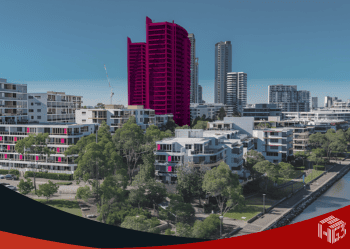
Australia’s growing demand for housing is reshaping how traffic, transport and land-use interact. Housing density and transport patterns are deeply connected, influencing everything from local congestion to the way communities use our roads public transport. Density affects everyday movement and how our towns and cities evolve.
Understanding density and how it affects movement
Lower density makes transport systems work harder. In many suburban areas there are long distances between homes, services and transport stops. Public transport frequency and coverage drop, and travel times increase. For example, a bus running only once an hour combined with a 1.5 hour total travel time makes the car a more convenient option for many trips.
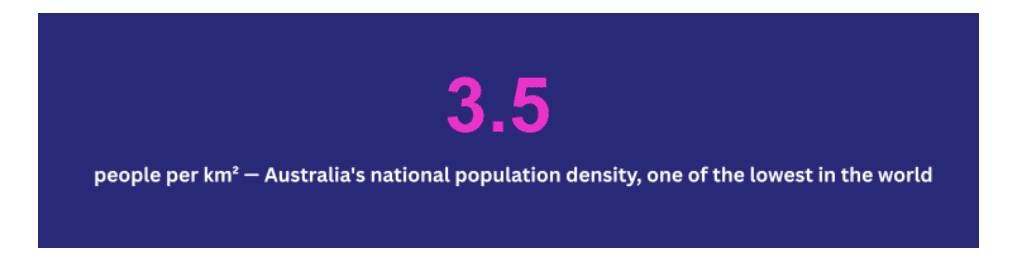
If you research our national density, it is widely reported that Australia has one of the lowest population densities in the world, averaging 3.5 people per square kilometre, which plays into part of our identity as ‘having so much land”. However, this isolated statistic ignores the densities across major cities, which vary widely, from 48.01 in Darwin to 535.9 in Melbourne, with small pockets such as Melbourne CBD North reaching 42,000 people per square kilometre.
What high density cities show us about density and movement
Urban researchers have studied the relationship between density and transport for several decades. One of the most influential findings is that higher average urban densities tend to support more efficient transport patterns. Studies often show a strong statistical relationship between density and lower transport energy use per person, with denser cities generally showing lower car usage and higher use of public or active transport.
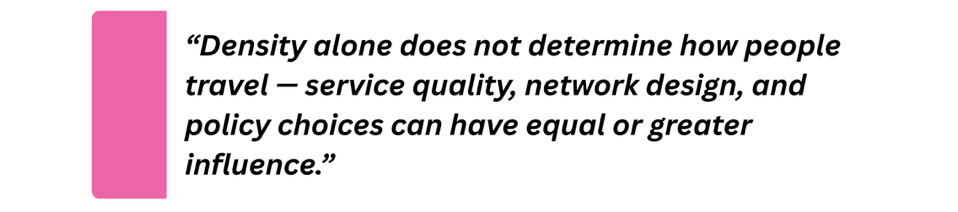
However, later research has demonstrated that density is only one part of the story. Many comparative studies have shown that density alone does not determine how people travel. Public transport service quality, network design, landuse mix and policy choices can have equal or greater influence on mode share. Cities with similar densities can have very different travel behaviours depending on how well their transport systems are planned and operated.
This means that high density cities do not automatically achieve strong public transport performance. What density offers is the potential for more efficient movement: more people living close to stations, bus corridors, shops and services, which makes it easier to run frequent services and supports walking and cycling. To convert that potential into actual behaviour change, cities also need reliable service levels, connected networks and planning approaches that prioritise access.
The key lesson from high density cities is that urban form and transport planning work together. Density can improve the viability of sustainable transport options, but the quality of those options determines whether people actually use them.
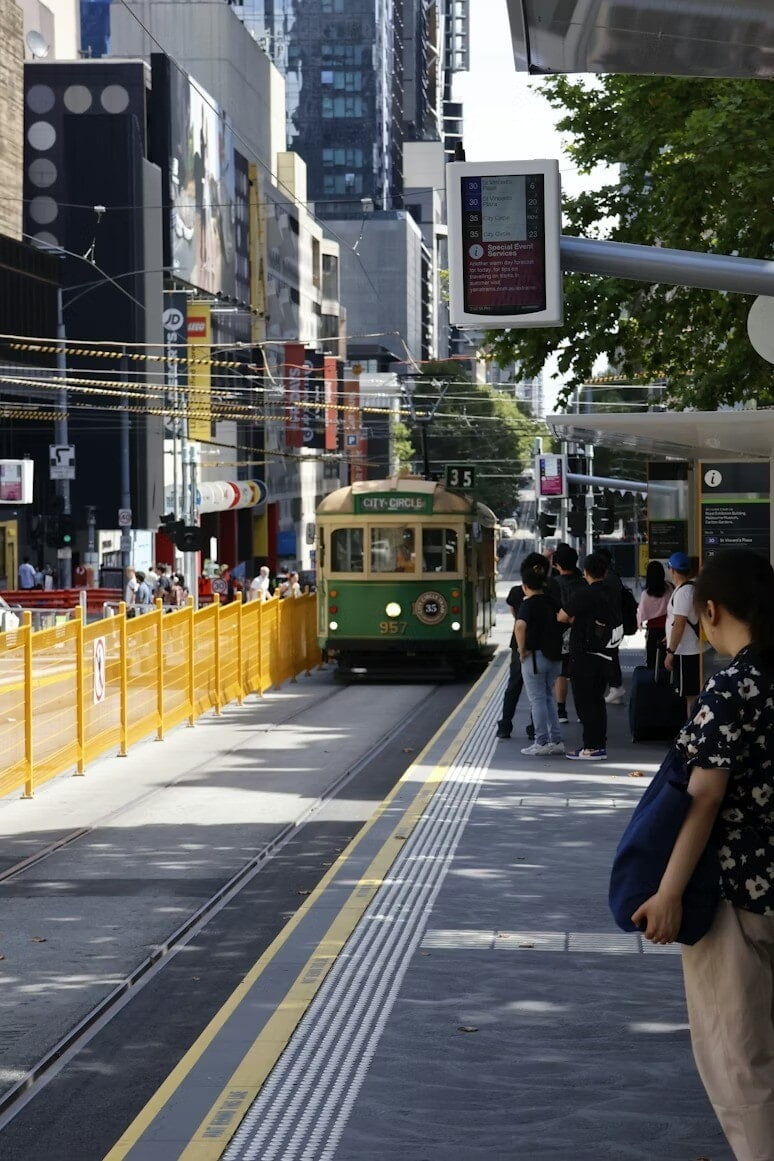
Melbourne's City Circle Tram (Route 35) - a zero-fare service at the heart of Melbourne's CBD. Photo: You Le, Unsplash
Housing density and traffic: unlocking movement within higher density precincts
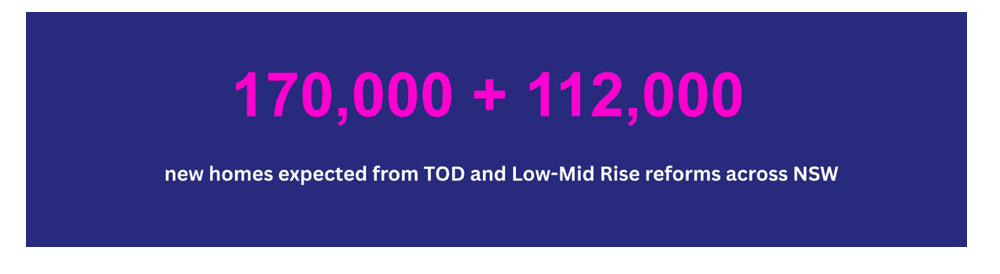
NSW is addressing the housing challenge through the Transport Oriented Development Program (TOD) and the Low and Mid-Rise Housing Policy. These programs concentrate development near stations and town centres, allowing residents to live closer to services and reduce reliance on car trips. TOD areas are expected to deliver 170,000 new homes over 15 years and lowmid rise reforms an additional 112,000 homes in five years.
This creates both opportunity and complexity. These types of government initiatives aim to create dense pockets where residents fulfill their daily needs within that area. Inevitably there are more movement and car trips which increase local traffic.
Residents most likely will move between precincts, either more frequently to go to work during the week or for leisure on weekends. When this happens, local and regional flows overlap, intensifying congestion on key corridors.
Transport improvements are needed, but largescale public transport upgrades cannot always keep pace with population growth. This sets a new baseline for expected traffic congestion across metropolitan areas.
Transport supports growing communities
How transport systems adapt will play a defining role in how growing communities function. As more homes are added to established and emerging suburbs, the way people move changes as well. Transport must evolve in two key ways.
First, public transport infrastructure needs to increase its capacity to support higher housing density. With more people living in clustered areas, government capacity to provide reliable and frequent public transport grows. Stronger connections make it easier for residents to travel without depending on a car.
Second, residents of metropolitan areas further from main centres may still find it difficult to rely solely on public transport. The long distances between homes, services and key destinations make it challenging to provide frequent coverage everywhere. As populations rise, traffic volumes will increase in many locations and communities may need to adjust their expectations to new levels of congestion.
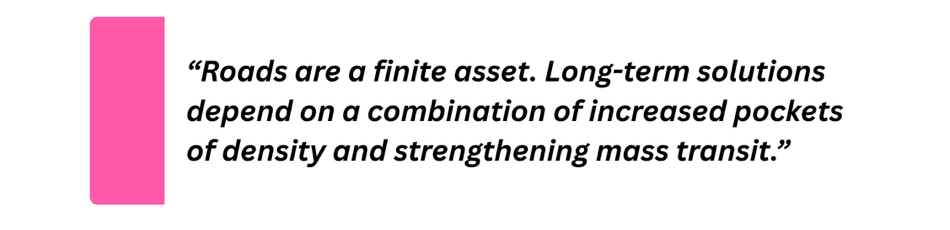
Roads are a finite asset. They can only be expanded to a certain point before it becomes impractical or too costly. Hence, longterm solutions depend on a combination of increased pockets of density and strengthening mass transit so that more people can move efficiently without adding to road congestion. Investing in public transport, walking and cycling networks allows cities to manage growth without defaulting to more car use.
At present, traffic congestion as a result of increased density is not yet a dominant topic in the public conversation. Government policies were designed to support higher density and encourage more housing supply to meet population needs. However, some developments are progressing more slowly than expected due to feasibility challenges. This means the full benefits of recent planning reforms are not yet visible. As these reforms evolve, there is an opportunity for the transport sector to lead the discussion on congestion, travel behaviour and the role that public transport must play in shaping the future of Australia’s cities.